
Stories
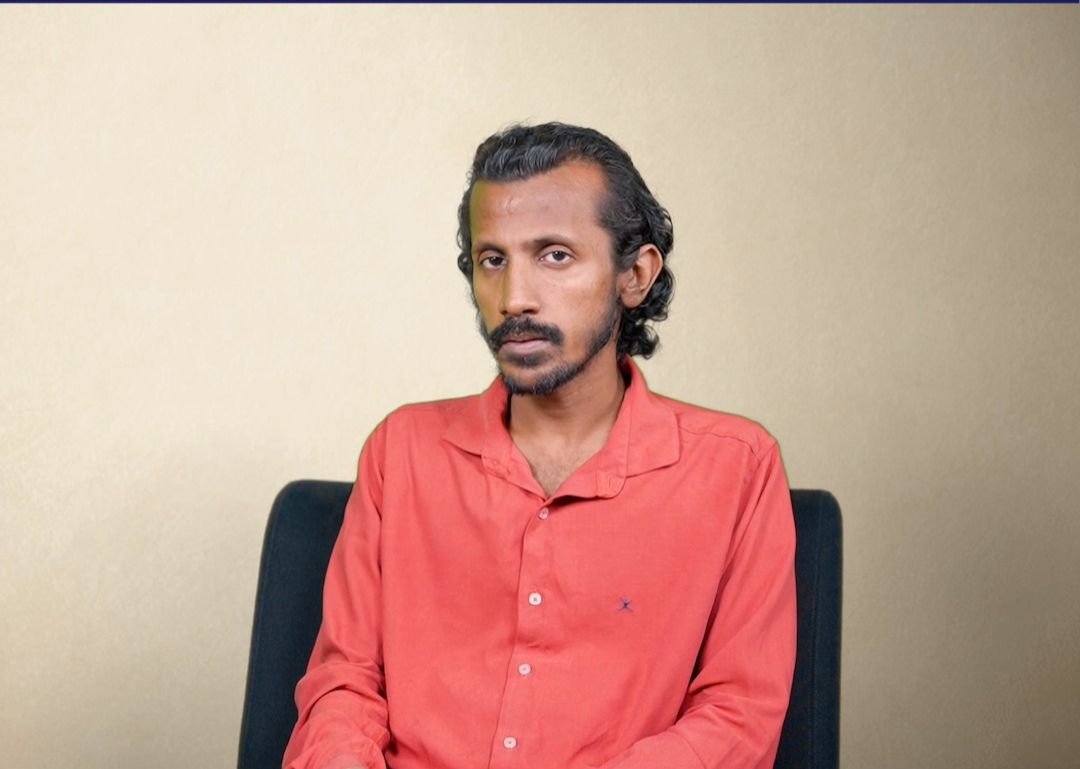
‘Sri Lanka should prepare for the long-term impacts of the US-Iran conflict’ – Foreign news analyst Chamara Sumanapala
The 2026 Iran War will have far-reaching and long-term economic, political, and social impacts even after it concludes, with the uncertainty pertaining to the conflict adversely impacting other countries’ ability to prepare for these impacts.
As the US-Iran War continues, disrupting global supply chains, Sri Lanka should look at economic diversification and foreign investment attraction. While this could lessen the impact of the US-Iran War on the economically recovering island, it could also better prepare Sri Lanka for future conflicts, foreign news analyst Chamara Sumanapala said.
In conversation with Development Media Network (DMN), Sumanapala explained the added challenges posed by the uncertainty surrounding the current conflict situation and the possible short- and long-term impacts it could have on Sri Lanka.
The uncertainty of the conflict
Uncertainty surrounding the US-Iran conflict is caused by volatile diplomatic relations, with neither the US nor Iran willing to take a step back from their demands. “They are very strict on their stance, which has become a huge issue in resolving this issue. The US firmly believes they can get Iran to agree to their conditions and Iran firmly believes that they are in a more favourable position. And no one has been successful in bringing these two parties to a point of agreement,” Sumanapala explained.
This has resulted in the conflict having no clear end in sight. And yet, even if the conflict ends soon, Sumanapala pointed out that undoing or recovering from the impacts of the war, especially supply chain disruptions, will take time.
“It will take a few more months for these disruptions to be undone and for the previous status to be restored. Estimates show this time duration to be around six months, and the time taken for this conflict to be resolved will impact this time estimation,” he added.
The impact of the conflict
The 2026 Iran War began on 28 February 2026, with the US and Israel engaging in war against Iran. In the weeks that followed, air travel was disrupted, energy prices saw fluctuations, with many governments cautioning citizens about limiting fuel use, and the supply of goods such as fertilizer was affected, impacting agriculture.
“A significant quantity of our fertilizer imports comes through the Strait of Hormuz. With fertilizer production reducing, which has already started happening in countries like India, an issue arises regarding alternative purchasing options available to us. Then an issue arises regarding food security,” Sumanapala said, pointing to the way the conflict between the US and Iran can have a chain reaction.
In the Middle East, economies are impacted by limited trade, attacks on infrastructure, the likely drop in foreign investment, and the disrupted tourism industry.
Sumanapala explained that a drop in revenue ultimately impacts the country’s population, which isn’t always made up of natives, especially in the Middle East.
“Many workers in this region are migrant workers. In some countries, the native population is very low, while the migrant population is high. It’s clear that issues will arise for this population” Sumanapala said.
He pointed out that this impact is already apparent, with many out of work, whether temporarily or permanently, and having to return to their countries of origin.
The International Labour Organisation (ILO) expects total working hours in Arab States to drop by 1.3% under rapid deescalation, 3.7% under a prolonged crisis, and 10.2% under a severe escalation – over twice the scale recorded during the Covid-19 pandemic.
Sri Lanka had a migrant worker population of 300,000 in 2024, of which 77,917 were in Kuwait, 52,067 in the UAE, 48,020 in Saudi Arabia, and 46,639 in Qatar. Remittance earnings have not yet shown decline, amounting to $ 768 million in April 2026, which is higher than earnings during the same period last year. Whether this resilience can be maintained is to be seen.
Meanwhile, the Central Bank of Sri Lanka has reported a decline in tourist arrivals in April 2026, with the year-on-year contraction of 22.3% seen as an impact of the Middle East conflict.
Further, when issues that result from the conflict cause economic and social pressure, a nation’s political stability is impacted, Sumanapala cautioned.
What this means for Sri Lanka
Given the impact on energy prices and fertilizer supply, it is natural to wonder what this conflict means for Sri Lanka. As a country still recovering from the Economic Crisis of 2022 and Cyclone Ditwah that caused significant damage in 2025, can we keep things functional until the conflict ends?
Sumanapala said: “Even if this situation is resolved within a short time, the economic burden on us will be considerable. The reason being that with the current situation, it will take time for disrupted supply chains to be restored and production to be revived.”
He pointed out that analysts did not see oil prices returning to February 2026 prices even by the end of the year, with the time frame expanding the longer the war goes on.
“If you look at the news we receive about the war, we see that oil prices are constantly fluctuating. There is no fixed price. If Trump says something today, prices increase, and when he says something tomorrow, prices decrease, and so on,” he said.
Sumanapala added: “As a country that is in the process of rebuilding, such fluctuations aren’t that good.”
He went on to say that economic impacts such as inflation are ultimately felt most by the poorest. “What a government of a country such as ours can do and should attempt to do is to protect these communities that will be most affected,” he added.
What Sri Lanka can do
Sumanapala explained that certain sectors will be more affected than others, such as the export sector and the transport sector. “Certain corrective measures can be taken, such as strengthening public transport and evaluating if any welfare programmes can be implemented, which could reduce the burden on the public. Further, the economy can be diversified and new markets explored,” he said.
He loosely categorised measures as short-term (such as strengthening public transport) and long-term (such as economic and energy import diversification).
When asked to elaborate further on what Sri Lanka can do in the current context, Sumanapala said there are ways to use the disruptions caused by the conflict in the Middle East to our advantage. One such way is to attract foreign investments that would otherwise go to the Middle East.
“A favourable environment for this is needed, so an individual can start and operate a business in Sri Lanka,” he said. This would require the necessary legal frameworks to build investor trust, as well as efforts to improve perceptions related to corruption in Sri Lanka.
He added that certain positives can be noted in this regard. For instance, Sri Lanka has an improved score on the Corruption Perceptions Index, with the island ranked 107 out of 182 countries in 2025, a 3-point climb since the previous year.
However, Sri Lankan needs to act quickly in creating a conducive environment for foreign investments. “What we need to remember is that it isn’t only Sri Lanka that is thinking this way. There are other countries which are also thinking this way, meaning we will have to face some competition. But we can look at this as a positive,” Sumanapala said.
He went on to say that it was important to develop our regional ties, with India, for instance, and Southeast Asian neighbours, using our location strategically to attract investments and build ties.
He added: “As a country with a neutral stance, we have the space to use our connections to expand our economic ties with other countries, using our neutral stance to our advantage.”
When exploring these short- and long-term measures, expert knowledge is crucial. Sumanapala emphasised the importance of involving such experts in the development of a plan that would help lessen the impacts of the Iran War on Sri Lanka.
“We still don’t know for certain how we will be affected because we don’t fully understand the scope of this problem. Even the people involved in it don’t know when it will end. So, it’s difficult to make any predictions. One thing is that the impacts of this conflict will be felt by countries like ours for a while. There is no doubt about that,” Sumanapala warned.