

Stories
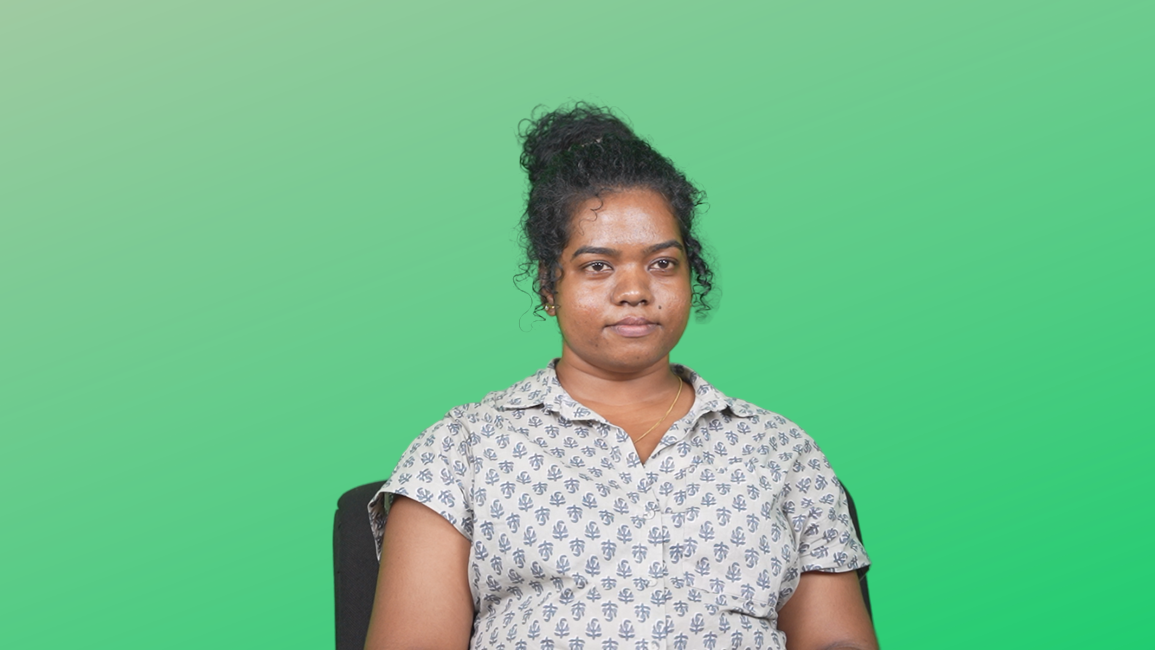
‘Our responsibility goes beyond ticking checkboxes’ – Urban designer and researcher Ashra Wickramathilaka on building inclusive cities
The Property Prices Index published by Numbeo recently made headlines in Sri Lanka for listing Colombo as the world’s second most unaffordable city to live in. Meanwhile, Central Bank of Sri Lanka data for the first quarter of 2026 shows a 18.5% year-on-year increase in the price index for new condominiums in Colombo District. Such data calls for a discussion about inclusive cities and the task that Sri Lankan city planners have in their hands.
Inclusive cities are described by UNESCO as “urban environments designed to promote equality and accessibility for all residents, regardless of race, gender, or socioeconomic status.” To make a city inclusive, it must be made affordable.
To better understand this topic, Development Media Network (DMN) spoke to Ashra Wickramathilaka, an urban designer and researcher, who went into detail about the challenges faced by urban planners, the need for green spaces, and why urban designers are inherently social activists.
The challenge of limited space and affordability
According to UN Habitat, Sri Lanka “currently stands at an urban paradox with regard to urbanisation.” This means that while official data categorises only a small percentage of the population as urban (18.2%), the country’s urbanisation is expected to be higher (around 50%).
UN Habitat also recognises various challenges to sustainable development in Sri Lanka, such as urban sprawl, land scarcity, climate change and disaster risk vulnerability, urban traffic encroachment, and diminishing green cover. Wickramathilaka emphasised the importance of solving such issues and building inclusive, sustainable cities.
“The amount of space in a city is limited. Especially in a country like Sri Lanka, we don’t have a vast land area. The proportion of environmentally sensitive areas is quite high. Furthermore, we have inconsistencies and shortcomings in our infrastructure,” she explained.
In the face of such issues, inclusive city planning, which provides residents with housing, transportation, recreational facilities, ventilation, and a good quality of life, can be challenging, but Wickramathilaka was confident that it was doable.
“Inclusive city planning is majorly challenged by affordability. Many talk about liveable cities; they describe them as good, beautiful cities. But are liveable cities affordable?” Wickramathilaka questioned.
Speaking about the unaffordability of cities like Colombo, she explained: “Such cities will never be inclusive; they become exclusive. Only a certain social segment can reap its benefits. Only a certain segment can remain inside the city.”
Wickramathilaka highlighted another issue. Cities like New York are home to many large apartment complexes. And yet, few seem occupied. This could be a result of the apartments being purchased as an investment rather than for residence.
“Meanwhile, the person who works in the city – who collects garbage, sweeps the streets, serves the city – has to travel for one and a half hours by train from far away,” Wickramathilaka said, delving into the inequalities within urban areas.
A city for everyone
Cities are not built for an individual or two or for specific groups. Cities are built for everyone – men, women, children, and even animals. For this reason, it is crucial that city planning responds to the voice of the people.
“The voice of the people represents their demands. That voice changes based on their needs,” Wickramathilaka said, explaining that not everyone has the same needs and wants. These differ based on one’s social class, ethnicity, family background, and profession. Therefore, urban designers have a responsibility to listen to these diverse voices when designing cities.
This is what makes an urban planner more than a mere technical officer. “If we are to practice our profession correctly, we cannot just hand over the plan, wash our hands of it, and step aside. The potential of our plans to change people’s lives is immense. Whether we turn people’s lives for the better, for the worse, or bring about profound change, that power is truly in our hands,” Wickramathilaka said.
She added: “I truly believe that, without us even realising it, when we practice our profession correctly, becoming a social activist is unavoidable.”
She recalled an incident during her time in the United States that demonstrates this: an elderly woman came forward carrying a leaf of a tree that was scheduled to be cut down according to the plan.
The woman said: “My husband and I planted this tree. Since the day my husband passed away, this tree is all I have. I talk to this tree. This tree is my life. Do whatever you want after I die, but please do not cut this tree down.”
Wickramathilaka recalled being sensitive to her request. “We left that tree as it was and designed the road around it,” she said, adding: “In the end, I don’t make the plan for myself; the plan is for the people. People’s needs must be addressed. We must be sensitive to the people.”
However, a question then arises: to what extent should we be sensitive? “That is when we must apply our professional knowledge,” Wickramathilaka said, pointing out that there are many factors to consider, such as politics and resources.
Gentrification and green spaces
When asked about gentrification, Wickramathilaka acknowledged its occurrence, but pointed out that gentrification is a western concept and may not manifest in the exact same way in Asian countries such as Sri Lanka.
However, she noted: “But that doesn’t mean it isn’t happening. Because of tourism, land prices have gone up due to investments in hotels. Certain new locations have emerged, especially down south. Because of that, land prices are unimaginable; automatically, only those with money can afford them.”
When issues such as gentrification cause a rise in prices, a need for affordable housing is created. This affordability extends to public transport and recreational parks.
Going into detail about the importance of green spaces, Wickramathilaka said they are of course crucial to the beautification of a city. However, beyond that, green spaces tackle issues such as the urban heat island effect.
Elaborating further on the importance of green spaces, Wickramathilaka said: “A city solely comprising offices is effectively useless; people need to be present. So, where do the people stay? Is it always inside their houses? People must have a place to gather. People need to come out and walk. Such social interactions must exist.”
This is especially true for people living in small spaces.
Wickramathilaka shared an experience during a recent visit to a housing complex in Colombo. “There, a mother spoke to me. She was holding one child in her arm. Her other child ran along a corridor. Pointing to the child, the mother told me, “This is a future Colombo thug.” I asked her why she said that.”
The mother responded: “We are trapped in here. There is no going outside. There isn’t a proper place for a child to play. Since my other child is an infant, I can’t go outside with my older child. Because of reasons like this, this child has nowhere to play. This child is trapped. Someday, this child will end up becoming a thug.”
Even when spaces have been allocated as open or green spaces, they are instead used to dump garbage or for various illicit activities. The playground equipment isn’t maintained. They are rusted and broken.
“So, it is not just about providing open spaces and ticking checkboxes to say they have been provided; there is a responsibility that goes far beyond that,” Wickramathilaka remarked.
She added: “Going beyond that, a city is not meant only for human beings. There is also biodiversity. Furthermore, biodiversity is not static in one place; it circulates within the city.”
Critical cartography
Critical cartography is a concept that is extremely relevant in this context. According to Wickramathilaka, critical cartography is a somewhat recent field, with its existence in planning discourse and practice in Sri Lanka minimal.
“Cartography is a subject with military origins. Historically, cartography was widely used to identify terrain and its anomalies for purposes such as suppressing the enemy, locating enemy positions, and strategising troop deployment,” Wickramathilaka said.
She added that critical cartography parts from this perspective, identifying the power held by maps. “For example, if we take a map of a village, draw a circle over it, and declare that all the houses in that area be demolished, that carries significant power,” she said, pointing out that people who have lived there for years will lose their land, their lives completely altered from that point onward.
“The power held by maps is considerable,” she emphasised, adding that despite this, many crucial aspects are excluded from maps. “Critical cartography employs different mapping techniques to examine people’s values as they use societal spaces. It is often discussed as theory and practice. The theories have developed considerably, but practical mapping methods have not yet been widely developed,” Wickramathilaka said.
She added: “However, it is increasingly entering the discourse, not just in planning, but in other fields as well. We need different mapping techniques to re-evaluate the terrain. We need new mapping techniques to understand how people use the land and for what purposes.”
This is beautifully fulfilled by critical cartography, she said, emphasising its critical role in urban planning.