

Stories
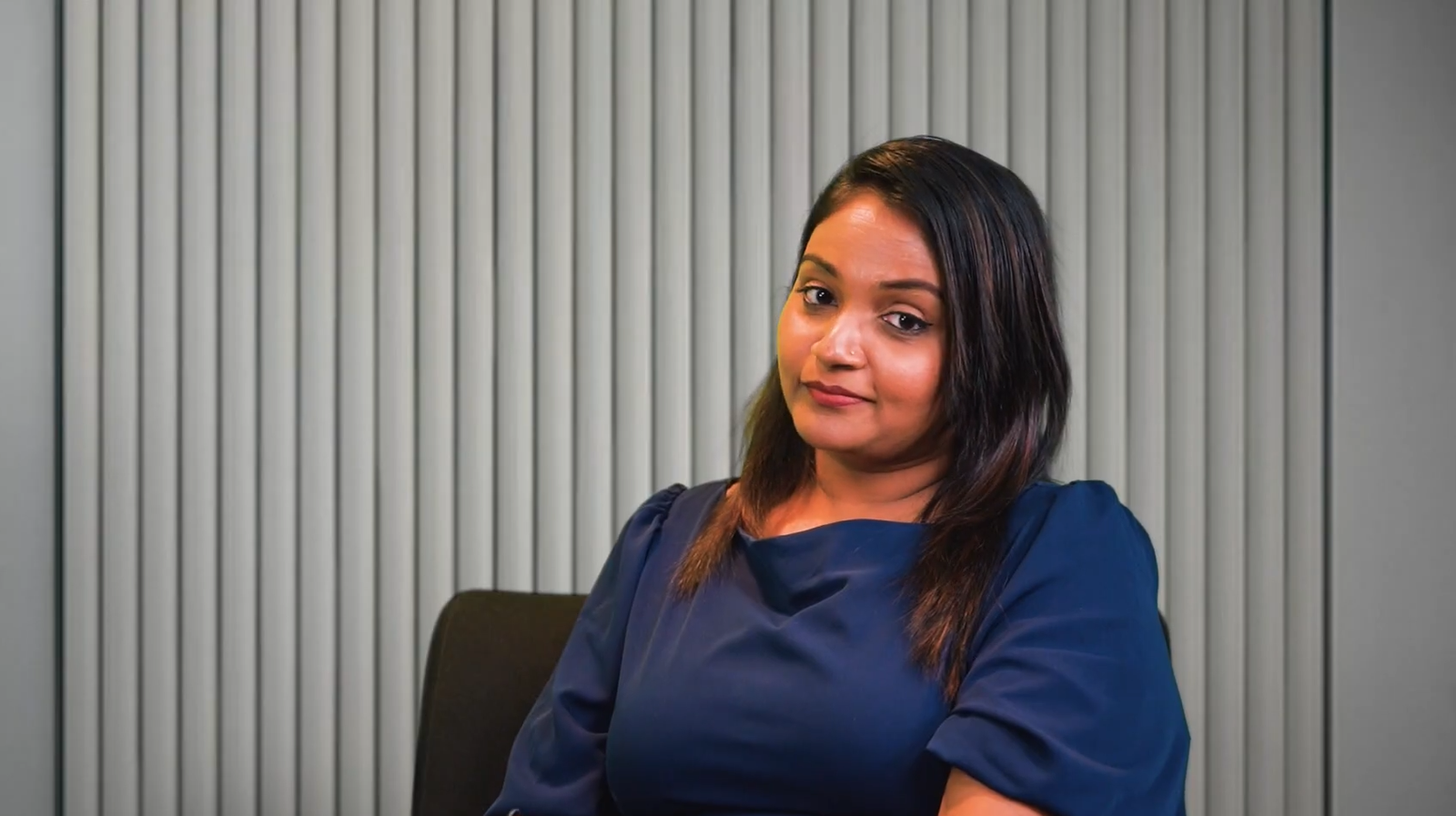
“Opportunities don’t come your way, you must seize them” – Corporate trainer Shivalatha Sivasundaram
With an increased number of women joining the corporate sector in recent decades, the challenges and opportunities they encounter have become a prominent topic among many women, whether they are aspiring to join the corporate sector or have already stepped into it.
Adding depth and clarity to these ongoing conversations, corporate trainer and The Training Lab Chief Executive Officer (CEO) Shivalatha Sivasundaram shares her insights with Development Media Network (DMN).
Skills to shine in the corporate world
Sivasundaram notes that soft skills such as communication, negotiation, and leadership, as well as hard skills such as technical competencies, are all important to succeed in the corporate environment. She also highlights that while skills can be naturally inherited by some, others have the option to learn and earn them.
In Sivasundaram’s view, emotional skills are important to everyone, and, regardless of gender, anyone can excel in emotional literacy.
At the same time, she particularly highlights women’s unique advantage in adopting emotional skills, saying: “As women, we often have a natural ability to execute empathy quickly because we tend to inherit nurturing qualities.” Further, she notes that empathy should be applied in an adaptable and assertive way, rather than in an overly soft manner.
For instance, she mentions: “When an issue arises, some people panic, break down, or cry. If you respond like that, it becomes difficult to move forward in an organisational setting.”
In Sivasundaram’s perspective, among women, the dislike of confrontation is the main reason for this. When an individual continuously refrains from openly expressing their concerns, they end up feeling sad or regretful and later tend to negatively express their emotions.
She identifies a uniqueness in how women respond to problems, saying that in the local context, men tend to discuss and sort out problems, but women try to evade opposition and stay quiet, expecting someone else to handle problems.
Eventually, as she points out, while you stay unbothered by a problem, somebody else faces it head-on and solves it. They then get noticed for how they handled the problem and delivered a solution. “Promotions and leadership roles come their way, while the person who stays silent doesn’t get the chance to shine,” Sivasundaram explains.
Even though avoiding pointless conflict is a good quality, she insists that staying silent and avoiding communication is not always helpful in an organisation.
Non-negotiable soft skills
Sivasundaram identifies three critical soft skills that would remain non-negotiable for anyone joining the corporate sector in the next five years.
#1 Strategic communication
She emphasises strategic communication as the most significant skill. Going beyond verbal communication, she also mentions non-verbal communication, such as gestures, posture, and attire. “How you walk into a room, how you open a door, and whether you slouch or walk confidently – these things all matter,” she notes.
Sivasundaram points out that Gen Z professionals, although extremely talented in digital and AI-related areas, lack certain key communication abilities, such as presentation skills. She says that even in social situations, Gen Z individuals are glued to their phones and are “slower to initiate, to step forward, and to take the lead.”
From her perspective, it is the same hesitation that shows up in initiation, communication, public speaking, and even during presentations.
#2 Adaptability
Adaptability, or the ability to adjust and balance yourself in the face of uncertainty, is the next most critical skill, in Sivasundaram’s opinion. “Wherever you go, whatever organisation or country you are in, when an issue comes up, you need the ability to face it head-on without panicking. That takes practice and experience,” she says, explaining how real life demands adaptability.
Taking the Covid-19 pandemic as an example, she highlights the importance of adaptability in the face of challenge and how, as an emotional skill, it gives you the bandwidth to face unpredictable situations and make decisions amidst uncertainty.
She also highlights the importance of patience in times that demand adaptability: “If you rush into everything, make decisions without thinking, or take risks without calculation, you lose adaptability.”
#3 The eagle’s eye view
The skill she points out thirdly complements both communication and adaptability: “When an eagle flies high, it sees everything below – every small detail – like a map. Similarly, when we face a situation, we should not look at just one isolated issue. We need to look at everything around it, analyse it, and then make a decision.”
In her opinion, there are two main ways the eagle’s eye view could help resolve any issue, whether it be personal or professional: firstly, to clearly assess whether there are other related issues; secondly, to see how one decision could affect some other area.
Further explaining, Sivasundaram states that when you take the eagle’s eye view to look at a problem, your communication and adaptability skills naturally align to resolve it.
“Even if you have never thought this way before, you can start tomorrow. When an issue comes up, patiently look at the surrounding factors before making your decision,” she reassures.
Behaviour as a decisive factor
Sivasundaram then steers the conversation into an aspect that is critical in her view: behaviour. In her opinion, similarly to skills, behaviour is something that can be learnt, yet it is even more important than skills.
She explains that an individual’s behaviour is demonstrated by the way they deploy soft skills when dealing with real situations; for instance, when they work with other people.
“No matter how many soft and hard skills you learn, what really matters is how you behave when you put them into practice,” she adds.
She asks: “Even if you perform well, it is hard for you to shine. Why?”
Referring to something many people, including women, might have come across, Sivasundaram emphasises why some individuals fail to land opportunities even if they actually work hard.
Although hard work is extremely important, she stresses: “Hard work alone is not enough. Smart work, your presence, and how you build your personal brand are all essential for you to shine.”
With the present state of competition, she encourages anyone, especially women working in the corporate sector, to focus on how to position themselves within the organisation.
“Opportunities don’t come your way. You must seize them. If it does not work out, you need to create them,” she further states.
Focus on information, not permission
Sivasundaram points out that while many women keep waiting for permission from their parents, partners, and supervisors, what they should be seriously looking for is the right information. In her view, it is information that enables them to make decisions, not permission.
“If you truly want to do something and you have the confidence to do it, take a calculated risk and do it, without holding yourself back, waiting for permission. Convince whoever you need to convince and go for it,” she insists, encouraging women to confidently take the initiative without overthinking.
Another area for improvement that many women should pay attention to is their hesitation to ask. Sivasundaram says: “If you ask, you often get. But many women do not like to ask. They worry, thinking what others will think of them if they ask.”
She explains how this hesitation holds women back from raising concerns, even about promotions and salary increments. Further, she mentions that, due to their reluctance to negotiate and ask questions, sometimes women end up with lower salaries compared to male colleagues holding similar positions.
Discovering success in the corporate world
In Sivasundaram’s perspective, a woman who is determined to discover success in the corporate world is “a woman who never waits for permission – someone who thinks strategically, communicates strategically, and confidently moves forward with what she believes is right.”
She puts paramount emphasis on confidence as the key attribute a woman must possess to succeed in the corporate world. She asserts that confidence can either be inherited or built, just like any other skill, and can be gained through skill development, tools, and learning.
“The woman I want to see in the corporate world is someone who builds that confidence – one way or another – and moves forward with it,” she further states.
Sivasundaram sets a golden rule for women entering the corporate world: “Ask, and you shall receive it. If not, take it. If they still refuse it, you build it.”
Written by Ransirini Herath, a Colombo‑based writer working in marketing and development communication