

Stories
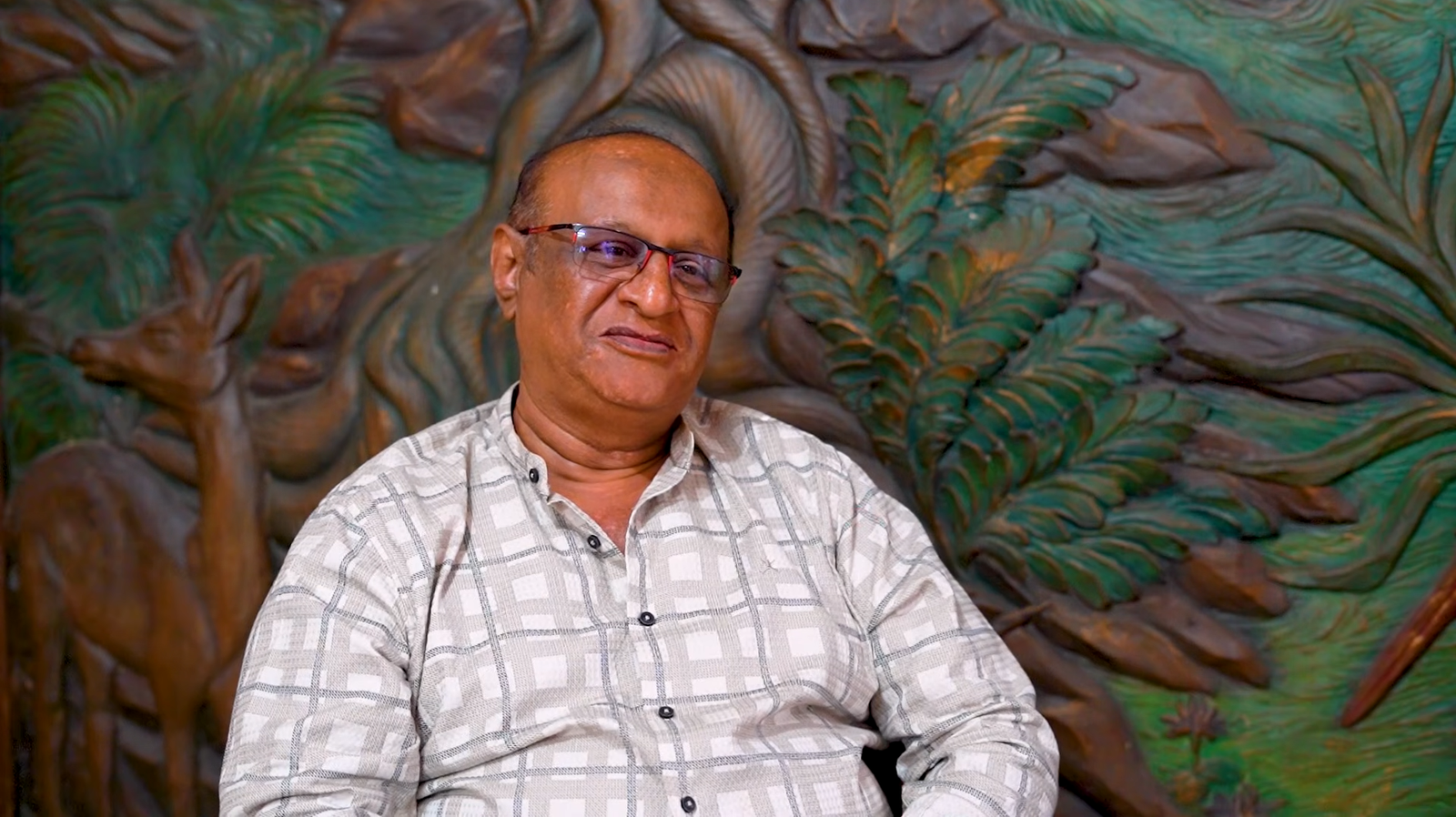
“Coexistence of traditional and digital media is crucial” – Senior journalist Chandana Thilakarathna
Traditional broadcast media holds timeless value in serving broader communities, but in the wake of digitalisation, a significant volume of its capabilities often remains untapped and underrated. But, as we look ahead, can we truly afford to overlook the value traditional broadcast media holds for our future?
As Sri Lanka rapidly shifts towards digital media, senior journalist Chandana Thilakarathna shares views with Development Media Network on Sri Lanka’s traditional media and its timeless value in responding to the challenges of heavy digitalisation.
An evolving media landscape
As digitalisation transforms the way we consume media, it is important to remember that traditional media such as radio can inspire new media. Thilakarathna recalls: “Between the late 1970s and early 1980s in Sri Lanka, there was a concept called Listening Schools. It was implemented by Sri Lanka Broadcasting Corporation’s Educational Service, in collaboration with the Department of Education.”
He believes that the Listening Schools initiative was a successful adaptation of traditional media to meet the educational demands of the time. Referring to times of crisis, such as the Covid-19 pandemic when remote education became a necessity, he highlights that traditional media programmes like Listening Schools still remain inspirational.
In his opinion, one trend after another is the worst saboteur of opportunities in today’s traditional media. As an example, Thilakarathna mentions that when a rating agency announces which program has secured the highest number of viewers, another media institution tries to create an exact carbon copy of that program.
In his view, to find new opportunities, it is essential to seek fresh avenues by truly understanding the needs and preferences of the entire population. “Sri Lanka has 22 million people. That is enormous potential. Have we ever properly studied what these 22 million people want to listen to?” he asks.
Broadcast infrastructure sovereignty
Thilakarathna explains a contemporary topic: broadcast infrastructure sovereignty. This sovereignty of a country’s broadcast infrastructure is something many countries are thinking about, he says, adding that Sri Lanka too, may be doing so.
He highlights that, as a country adopts digital media, it inevitably relies on the internet. “But if there is no internet, any digital devices – the mobile phone, the television – become useless.”
He further explains how this setting creates significant challenges to a country’s communication independence. “Who owns the internet? Who has control over the internet? That is an important question. Anyone who owns the internet can disrupt the entire communication system of a country that exclusively relies on digital communication.”
“If we depend entirely on digital, we lose sovereignty over our broadcast infrastructure,” he says, insisting that the retention of the analog broadcasting system, along with analog devices like radio and television, is therefore non-negotiable.
“It is not advisable for a country to completely abandon analog broadcast and shift entirely to digital,” he says.
Thilakarathna identifies Sri Lanka’s present broadcasting system as a hybrid model, which combines digitally supported analog technologies as used by many broadcasting institutions in the country. As an example, he mentions the traditional AM/FM radio with digitally supported extra features, such as improved audio clarity and additional channels.
He further puts emphasis on the hybrid system’s effectiveness in serving a wider audience, because they support older devices, thus allowing individuals to continue listening and watching broadcasts as they always have, while simultaneously offering digital enhancements to those with modern equipment.
He says: “Retention of the analog broadcast is essential, even in the hybrid system, because, although the platform is digital, the broadcast remains analog.”
Credibility comparisons
Providing insights on the ongoing debate about trustworthy media, Thilakarathna says that to confirm the accuracy of the content they consume, people still turn to conventional media. Thilakarathna attributes the credibility gap between traditional and digital media to two main factors.
- Social media is often contaminated with subjective information, such as narrow perspectives
- In Sri Lanka, an extensive scope of digital channels is not yet regulated
From his perspective, the reliability of information is another critical reason why hybrid or digitally supported analog systems should continue to exist. Regardless of the digital features, the credibility of information is in safe hands as long as traditional media is present.
“Even though more people have moved to social media, traditional media is more likely to lead in terms of credibility,” he argues.
Consumption and fragmented attention
Thilakarathna expresses concern over the swift change that has taken place during the last two decades in terms of the types of digital content. He says: “Back then, when baby boomers, Generation X, and Millennials started watching YouTube, the content was similar to the traditional programs broadcast on electronic media.”
“But today, the current generation is not watching YouTube in the same way. They watch extremely short content such as Reels, YouTube Shorts, and TikTok,” he says, pointing out a pattern of disruption. He adds: “After watching one clip for about 20 seconds, they move to the next. Each one tells a different story.”
He believes this disruption is responsible for creating a state where many stories are left incomplete in the minds of the younger generation. He says: “The new generation is accustomed to short, fragmented attention spans. They find it challenging to sustain their focus for at least 20-30 minutes. It negatively affects their ability to concentrate on one task, to study effectively, or to engage in productive work for eight hours.”
Thilakarathna points to another harmful aspect of the digital world. He argues: “If someone uploads something to YouTube, their success depends on the number of views they get. Their income and popularity also depend on that.”
“The problem here is that the definition of success on digital platforms is not always the same as success in terms of individual or national development,” he explains, adding: “For instance, on Facebook, everyone gets their own metrics. Anyone can know who watches their content and the specific demographics of their audience.”
As per his opinion, the popularity trap, which occurs when people start chasing ways to increase their popularity, is a serious concern and should be addressed effectively. “When they try to make their programs more popular, they end up following trends rather than constructively creating value.”
In his belief, the establishment of a development-oriented, national broadcast agenda is critical in battling these issues. “If every media outlet starts chasing delusional success and falls into the trap of popularity, who will work for the country’s developmental goals?” he asks.
Need of the hour: Regulation and strategy
Thilakarathna says: “The immersive use of digital media is the real danger, rather than digital media itself. The lesson is that it’s necessary to have proper regulations in place.”
According to Thilakarathna, the biggest issue is not whether the media is analog or digital, but how the people who regulate and lead the media landscape respond to these challenges. “Therefore, regulation of digital media remains a critical need of the hour. Sri Lanka’s regulatory preparedness in battling the challenges of digital media is questionable.”
Thilakarathna highlights that careful and honest consideration of each situation is crucial to understanding the practical constraints and developing more effective and well-adapted solutions to address educational and communication challenges.
He shares: “Currently, with the absence of strategic interventions, those who turn entirely to digital are becoming vulnerable, while analog is slowly dying.”
In his view, it’s high time that the authorities that govern the country’s media landscape take strategic measures to eliminate these imbalances.
Advice for aspiring professionals
Thilakarathna is of the belief that traditional broadcasting systems, including analog and electronic, will not disappear; therefore, occupations in these systems are expected to continue.
“However, if someone plans to pursue a career in traditional media, there is one golden rule they need to keep in mind: the more they put effort into identifying their audience, the more successful they can be in their career,” he says.
Thilakarathna shares his views on a career in digital media as well. He asserts: “A content creator earns money when the content they produce gains value. Among content creators, there are people who create good content that is useful to society, and there are also people who create very low-quality content. Yet both groups earn money.”
“The first group can survive on both digital and traditional media, while the latter, even if they manage to survive on digital platforms, will find it difficult to fit into traditional media,” he says, upholding the fact that traditional media still hold the reins.
Emphasising one universal truth about any audience, he adds: “Everyone has one simple expectation: to suffer less tomorrow than they did today. Everyone wants a better tomorrow.”
He says: “As a communicator, if you can support the listener in their struggles, if you can show them a path forward, if you can help relieve them from the stress they are currently experiencing, then they will stay with you.”
“Learn to understand people. Learn to talk to people. Learn to feel their genuine emotions. You must always be open to feedback from the other side. The communicator who understands their audience achieves the extra mileage,” he advises.
Written by Ransirini Herath