
Stories
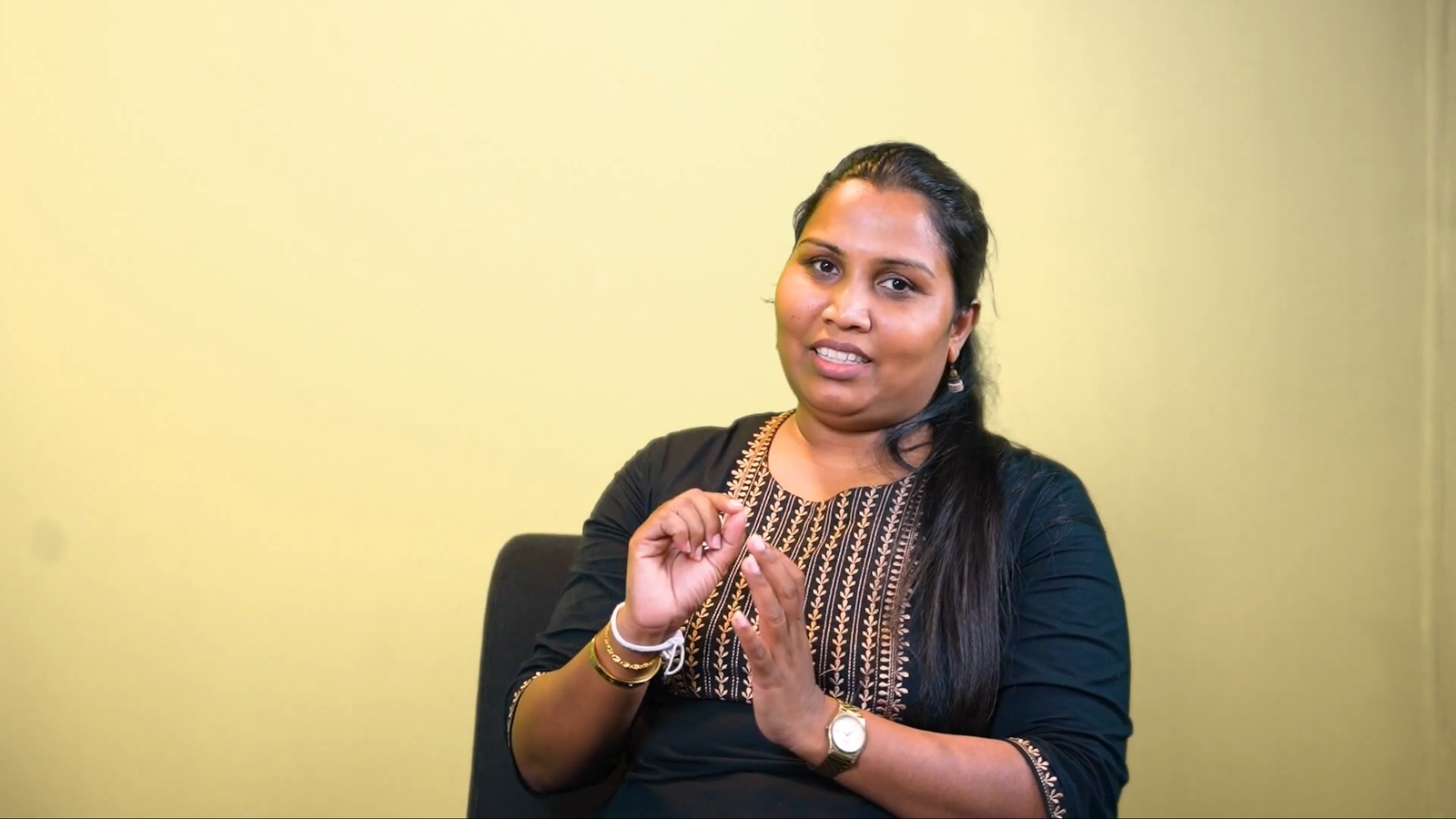
“A woman must define herself on her own terms” – Lecturer Iresha Samarasinghe
Gender is among the first identifying factors we include in descriptions of ourselves. And yet, gender isn’t a straightforward concept, and how we define gender, whether as a construct or regarding our own gender, can vary. Many factors influence these definitions, Colombo University Sociology Department lecturer Iresha Samarasinghe said in conversation with Development Media Network (DMN).
According to Samarasinghe, biological factors, such as anatomy and hormones, that determine sex, can influence our definitions of gender. However, there are also psychological factors to consider, with Samarasinghe saying: “We know there are psychological differences between men and women, such as how we handle our emotions, our endurance, and even how we love.”
Social factors also impact gender identity, with factors such as culture, family, and societal attitudes being influencing factors. “The image of a woman is formed by these biological, psychological, and social factors. This could change from society to society and country to country, especially considering family environment,” she explained.
One’s personality also weaves into these definitions. Thus, the definition of a woman is impacted by both social factors as well as personal identifications. This is why a woman must define herself on her own terms, which include the abovementioned factors.
Positive trends
Referring to the work of anthropologists such as Margeret Mead, Samarasinghe explained that societies can be patriarchal or matriarchal. Historically, matriarchal societies not only featured women who went hunting and were physically stronger, but also men who were responsible for childcare and household chores, now commonly prescribed to women.
Despite this, women today are more exposed to society than they were a few decades ago. “If we look at the current Sri Lankan society, a lot of women are exposed to society. They engage in jobs. They provide financial support. There are women who beautifully maintain this work-life balance. They handle their responsibilities at home, whether as a mother or a wife, and their responsibilities in a professional context,” Samarasinghe said.
She saw this as a positive trend.
Formal education and financial security
While societal change is encouraging more and more women to pursue higher education or enter the workforce, there are also economic necessities at play. These can nudge an individual towards choosing employment over higher education. They also make get-rich-quick schemes popular.
When asked if education is important, especially for women, Samarasinghe explained that education can be categorised as formal education and informal education. “I would like to clearly state that, whether you are male or female, formal education alone isn’t sufficient to succeed in life,” she said.
Samarasinghe emphasised that while formal education through books or educational institutes is important, informal education through one’s family, friends, and society is also important, especially when putting formal education into practice.
Moving to the topic of get-rich-quick schemes, which some choose over higher education, Samarasinghe said that while income generation is important, higher education isn’t pursued with the sole goal of earning.
Sri Lanka’s higher education doesn’t only focus on income generation. Instead, students’ knowledge is expanded, skills are developed, and attitudes are changed. “As an example, a person who takes a shortcut and earns money may not know how to build social relationships or have a happy married life. They mayn’t know how to maintain connections with people or how to solve problems,” she said.
Samarasinghe elaborated: “I’m not generalising but comparatively, formal or university education goes beyond quick earning and instead develops all these areas. You can’t put a price on such things. It is with time, experience, and our associations that these develop.”
Determination, value, and wellbeing
Samarasinghe also spoke about the value we give ourselves, saying individuals should identify who they are and value themselves. Doing so calls for honesty and acceptance about our capabilities.
“You need to identify who you are. We all have things we can do and things we find challenging. Thus, we need to identify our capacity,” she said, adding that we shouldn’t underestimate ourselves, especially based on what we can’t do.
“We should do our best, we should be determined, we should have targets in life, and we should stimulate ourselves internally and be motivated. This is the power that takes us forward,” she shared.
Samarasinghe went on to highlight the importance of mental wellbeing, saying that happiness is relative and it is only the individual who truly knows what brings them happiness.
“You shouldn’t think you’ll be happy when you go home or that you’ll be happy when you go out. From the time you wake up, engage in work in a way that brings you joy,” Samarasinghe advised.
However, while encouraging people to find joy in different situations, she acknowledged that one can’t be happy throughout the day. In such instances, it is important to share it with someone you trust instead of bottling it up and internalising it, she said.