
Stories

Heard, but not always listened to: Mental health, the media and the people who’ve lived it
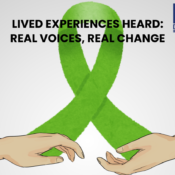
Every year on 10 October, the world marks World Mental Health Day. This year’s theme is ‘Lived experiences heard: Real voices, real change.’ It sounds simple, but it asks something quite uncomfortable of all of us: when we talk about mental health, who is actually in the room?
The campaign asks that people with lived experience of mental health conditions be recognised as holders of vital expertise, and that their voices shape the policies, services and decisions that affect their lives – not as a guest appearance, but as partners.
What lived experience actually means
It’s worth being clear about the term. Lived experience is what someone has gone through themselves, the kind of knowledge that people who have only heard or read about it don’t have. A doctor knows the textbook. A policymaker knows the budget. Someone who has navigated the system as a patient, or failed to get into it at all, knows what it feels like from the inside.
The World Health Organization (WHO) is also careful to say that lived experience takes many forms, and no one person can speak for everyone. That matters. One story is never the story.
Asked to share, left out of the decisions
Here is the part that stays with you. WHO points out that people with lived experience are too often asked to share their stories but excluded from decisions. Being heard and having influence are not the same thing.
The numbers back this up. In WHO’s Mental Health Atlas 2024 survey, only 37% of responding countries had included people with lived experience in training for primary health care workers, and just 45% reported ongoing collaboration with them and with family or caregiver groups in planning, delivering or monitoring services. On paper, more countries consult people when writing policy. In day-to-day practice, far fewer keep them involved.
What about the media?
This is where things get personal for anyone who writes, posts or shares for a living.
WHO’s campaign page doesn’t focus on the media itself, so we went looking. The most useful research we found comes from the UK. NSUN, a network run by people with lived experience of mental ill-health, distress and trauma, surveyed 141 people and held two focus groups in 2025 about their experiences of engaging with the media. We want to be upfront that this is a UK study, not a Sri Lankan one. But the patterns are worth reading closely.
The findings weren’t flattering. People often felt tokenised, lacked clear guidance on what taking part involved, and were usually not paid for their time. Many were also worried about the long-term effects of putting their story out publicly. NSUN said people are often re-traumatised when they share personal experiences with the media.
There’s a quieter problem too. NSUN notes that breaking news about things like abuse or inquests often leaves lived experience voices out entirely. The people most affected by the story end up as the people least consulted about it.
Why it’s hard, and why that’s not an excuse
Most journalists don’t set out to cause harm. Reading around the topic, it’s clear the pressures are real. In one discussion among journalists and a mental health expert, a journalist described how everyone struggles to find the right words, with time pressure and a lack of training making it harder, especially when covering children and young people.
Deadlines are tight. Newsrooms are stretched. Handling someone’s most painful chapter with care takes time that often isn’t there.
But being understandable isn’t the same as being acceptable. A person who shares something raw deserves to know what they’re agreeing to, to have support afterwards, and to be treated as more than a ‘story’. The fix isn’t complicated. It’s early involvement, clear information, fair payment and real support.
Why this matters beyond the headline
Coverage shapes attitudes, and attitudes shape policy. One writer with lived experience argues that when these voices are missing, it affects how both the public and decisionmakers understand mental health. If the only people shaping the story are those who’ve never lived it, the picture will always be a little off.
And the benefit goes both ways. WHO says people with lived experience can spot barriers others overlook, and that involving them makes mental health systems more person-centred, rights-based and responsive.
A note closer to home
Sri Lanka has been moving in this direction. The country launched its National Mental Health Policy 2020-2030 with WHO’s technical support, and WHO has noted that community empowerment and the active engagement of people with lived experience help reduce stigma and discrimination. In 2024, a workshop in Sri Lanka also looked at how to move people with mental health conditions towards community-based care.
That last point connects to this year’s campaign. WHO highlights that only about 9% of countries have fully shifted from institution-based care to community-based models, and about half of reported psychiatric hospital admissions are involuntary. People with lived experience of institutions have a lot to say about that, and they should be at the table when it’s planned.
Looking ahead
World Mental Health Day isn’t really about a single date. It’s a checkpoint. A chance to ask who’s been left out of the conversation and what it would take to bring them in.
For the media, that means treating people as collaborators, not content. For the rest of us, it means sharing lived experience stories responsibly, crediting the people behind them, and remembering that being heard is only the first step.
As WHO puts it, the goal is to move from listening to action, and to build mental health systems with people with lived experience, not merely for them.